
Off the dancefloor and onto the balcony
The balcony gives clarity; the dancefloor gives influence. How to move between the two with purpose and on purpose.
Nichola Lynagh · · 3 min read
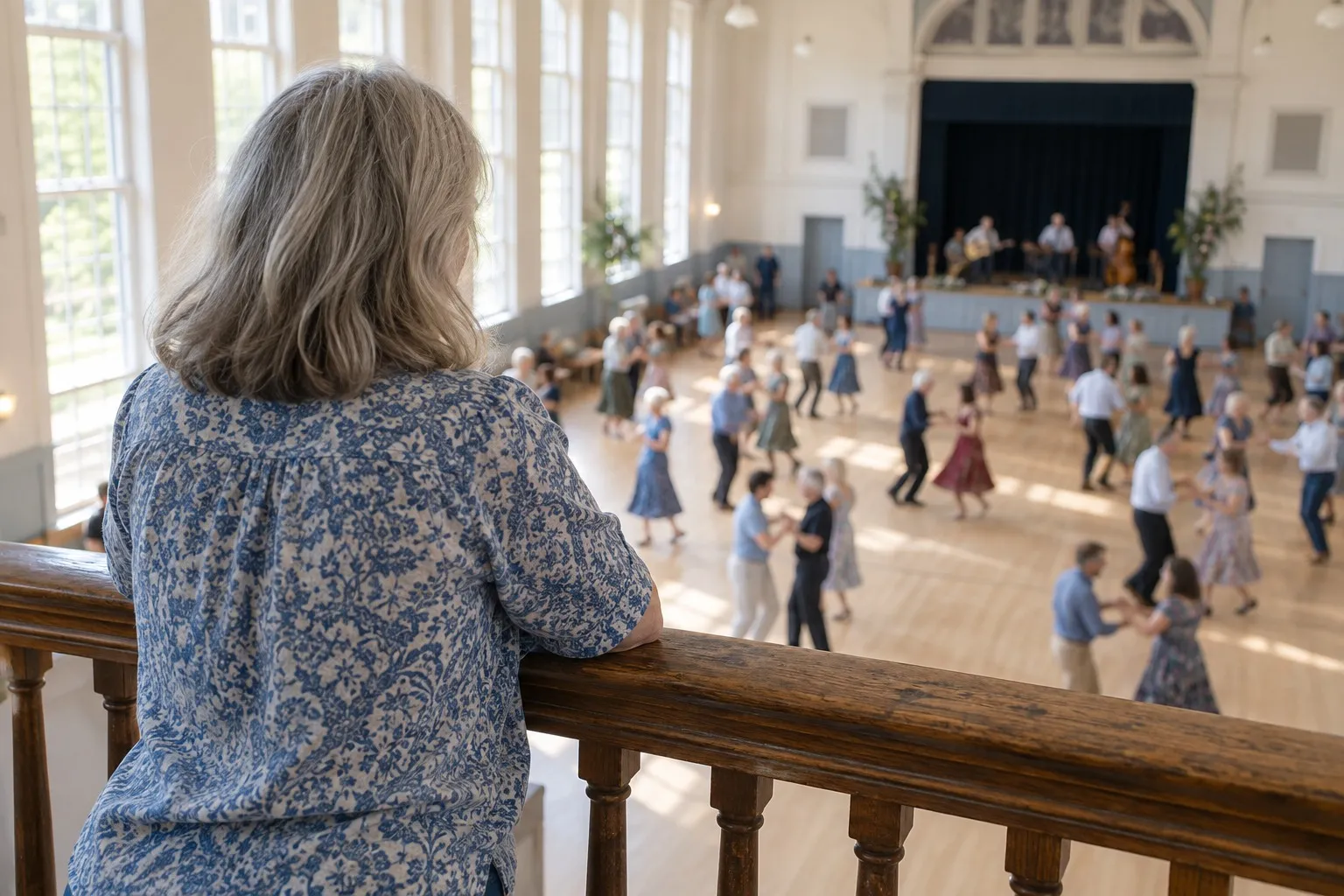

I have loved this metaphor since I first came across it. In their book ‘Leadership on the Line’, Ron Heifetz and Marty Linsky describe what leadership can feel like as a movement between two places: the dancefloor and the balcony.
The dancefloor is the daily operation, everything that is necessary for a system to deliver. The balcony is the space above it, where the uncluttered thinking and the strategic, proactive thinking can happen.
As a leader, the challenge is real. What should I do? Should I watch the dance from above, or get on the floor and dance myself? The practical answer isn’t either/or. It’s when and how you move between them, so you get the benefits of both without getting stuck in either. The balcony gives clarity; the dancefloor gives influence.
What each place gives you
When you’re on the dancefloor you can see things close up. You can really get into the action and try things out for yourself. You can affect what you see. That is also where the risk lies: your view stops at the people dancing next to you.
Up on the balcony you can see the whole picture and how all the moving parts fit together. But you can’t affect the action from up there, and you can’t see everything at once. There’s just too much information. That is where zooming in and zooming out becomes useful. Leaders have to take themselves out of the fray to understand what’s really going on, and then return to the dancefloor to have an impact.
On the dancefloor
- You can see things close up and get into the action.
- You can try things out for yourself and affect what you see.
- Your view stops at the people dancing next to you.
On the balcony
- You can see the whole picture and how all the moving parts fit together.
- This is where the uncluttered, strategic thinking happens.
- You can’t affect the action from up here.
Questions to ask from the balcony
Heifetz believes teams need to get up on the balcony regularly and ask one question: what is really going on here? These are the ones I add when I’m working with a leader or a leadership team.
- Where are people emotionally? How are people doing?
- Who is saying what, and to whom? Who is not saying much?
- Who needs your support?
- What assumptions am I making?
- What is the impact I could be making as a leader?
Why this matters
The balcony gives you a different perspective on everything that is going on. It lets you take a step back and think clearly and more proactively. And it gives you a clearer view of what’s going on for your stakeholders: the bigger picture, the vision and values of the system, the direction of travel rather than the reactive mode of dealing with the operational mountain.
A short reflective checklist
No answer here is right. All I am inviting you to do is get curious, without judgement, about where you spend your time.
- Where did I spend most of my time this week: balcony or dancefloor?
- What drew me there? Urgency, comfort, avoidance, habit?
- What did I learn that I couldn’t have learned from the other vantage point?
- What one thing will I do differently next week to balance both views?
- What could I be more intentional about as a leader?
Make the switch a ritual
Treat balcony time as a leadership duty, not a luxury. Timebox the view: schedule short, regular balcony moments, 30 to 60 minutes a week, to scan the patterns and the signals your stakeholders are sending.
Then move deliberately between the two. Clarity without action is impotent; action without clarity is exhausting. Balance both, and you’ll shape a system that learns to dance on its own.